

Cold plunge in winter: what changes and how to adapt

In this article
Winter is easy on the chiller and harder on you. Keep the lid on, shelter the chiller from direct rain and snow, consider setting the water a degree or two warmer, and plan a warm place to dry off and get dressed right after. In long freezing spells outdoors, ask us for advice for your location, or move the cold plunge indoors.
Many people discover their cold plunge in summer and wonder what happens when the weather turns. The short version: the water is easy, the routine around it is what changes.
What changes for the cold plunge
- Less work for the chiller. With cold air around it, the water holds its temperature easily and the chiller pauses more often.
- Lid on, always. It keeps rain, snow and leaves out.
- Shelter the chiller from direct rain and snow, while keeping air flowing around it.
- Long freezing spells. If temperatures stay below zero for days where you live, ask us for advice for your setup, or move the cold plunge indoors for those weeks. Because AirTub is inflatable, setting it up again in the new spot takes about 20 minutes. See Indoor or outdoor cold plunge.
What changes for you
Getting out into cold air is often the hardest part in winter, not the water. A few things help:
- Consider a degree or two warmer than in summer, or a slightly shorter session.
- Prepare your exit: towel, robe or warm clothes and sandals within reach before you get in.
- Warm up naturally by drying off, dressing and moving around. Our How to Plunge guide covers the routine after you get out.
- Keep the habit. A short, regular plunge is better than skipping weeks.
Frequently asked questions
Does the water freeze?
With the lid on and the water circulating, a cold plunge set to your usual temperature holds that temperature. In prolonged sub-zero conditions, follow our advice for your location or move it indoors.
Should I take a hot shower after a winter plunge?
Letting your body warm up on its own for a few minutes is the usual advice. Dry off and get dressed first, then a warm shower is fine if you are still cold.
AirTub
Ready for your own cold plunge?


Keep reading
 Setup
Indoor or outdoor cold plunge: where should you put it?
Both work well. Indoors you get easy daily access and stable conditions: protect the floor with an insulating mat and keep the room ventilated. Outdoors you get space and fresh air: keep the chiller ventilated, shaded and out of the rain, and use a weather-protected socket. UV XL and Ozone work in both places. 2 min read Training
Cold plunge for runners, padel players and CrossFit athletes
Runners and padel players can plunge soon after long runs, matches and tournament days, when feeling fresh for the next effort matters most. CrossFit and strength athletes should keep cold water away from heavy lifting sessions and use it on conditioning days, rest days or several hours later. Around 10–15°C for up to 10 minutes is a good recovery setting. 1 min read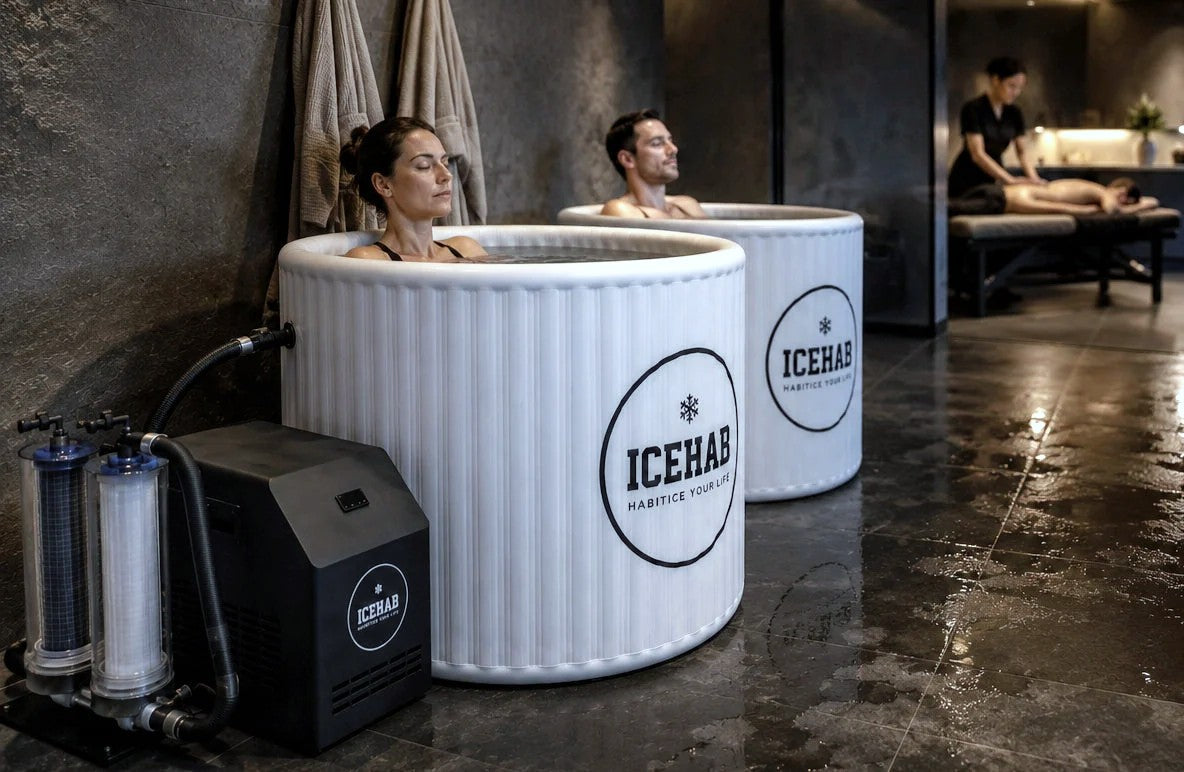 Water care
How often should you change cold plunge water?
With the included filtration only, change the water about every 30–40 days. With UV XL or Ozone, every 2–3 months, and with both together every 3–4 months. Getting in sweaty or without a shower shortens these times; showering before you plunge and keeping the lid on lengthens them. 1 min read Our team, not a bot
Need help choosing?
Ready to choose your AirTub?
The right AirTub and extras for you, with the final price, or ask our team.
We speak your language.
Flexible payment
Pay in full or split into instalments
Pay in full
Card, Apple Pay, Google Pay or bank transfer
Pay in 3
Instalments with Klarna
Pay in 4
Instalments with Scalapay
Pay in 3–12
Instalments with PayPal
Subject to provider approval. Your order, delivery and warranty stay exactly the same.