

Learn
Cold plunge, explained.
Practical guides on choosing, setting up and using a cold plunge at home or in your business, from the team behind AirTub.
 Training
Cold plunge for runners, padel players and CrossFit athletes
Runners and padel players can plunge soon after long runs, matches and tournament days, when feeling fresh for the next effort matters most. CrossFit and strength athletes should keep cold water away from heavy lifting sessions and use it on conditioning days, rest days or several hours later. Around 10–15°C for up to 10 minutes is a good recovery setting. 1 min read Setup
Cold plunge in winter: what changes and how to adapt
Winter is easy on the chiller and harder on you. Keep the lid on, shelter the chiller from direct rain and snow, consider setting the water a degree or two warmer, and plan a warm place to dry off and get dressed right after. In long freezing spells outdoors, ask us for advice for your location, or move the cold plunge indoors. 1 min read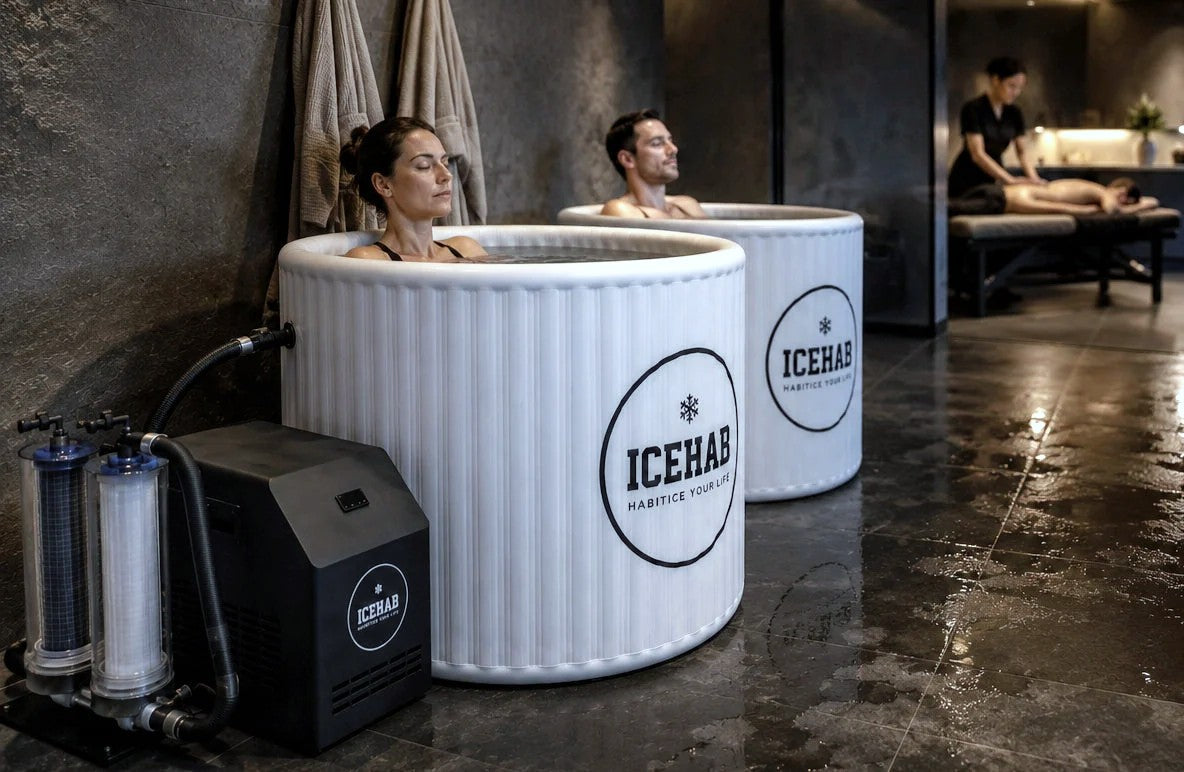 Water care
How often should you change cold plunge water?
With the included filtration only, change the water about every 30–40 days. With UV XL or Ozone, every 2–3 months, and with both together every 3–4 months. Getting in sweaty or without a shower shortens these times; showering before you plunge and keeping the lid on lengthens them. 1 min read Buying guide
Inflatable or rigid cold plunge: which should you choose?
A rigid tub is fixed and heavy; a well-made inflatable tub with SUP (stand-up paddle) construction is rigid once inflated, light to move, quick to set up and easy to store. For most homes and many businesses, a premium inflatable tub with a proper chiller and filtration gives the same experience with far more flexibility. 1 min read Basics
How does a cold plunge chiller work?
A cold plunge chiller is a small refrigeration unit. A pump moves the water from the tub through the chiller, where a heat exchanger takes the heat out, and back into the tub through a filter. It cools until the water reaches the temperature you set, then pauses while the water keeps circulating, and starts again when the water warms up a little. 2 min read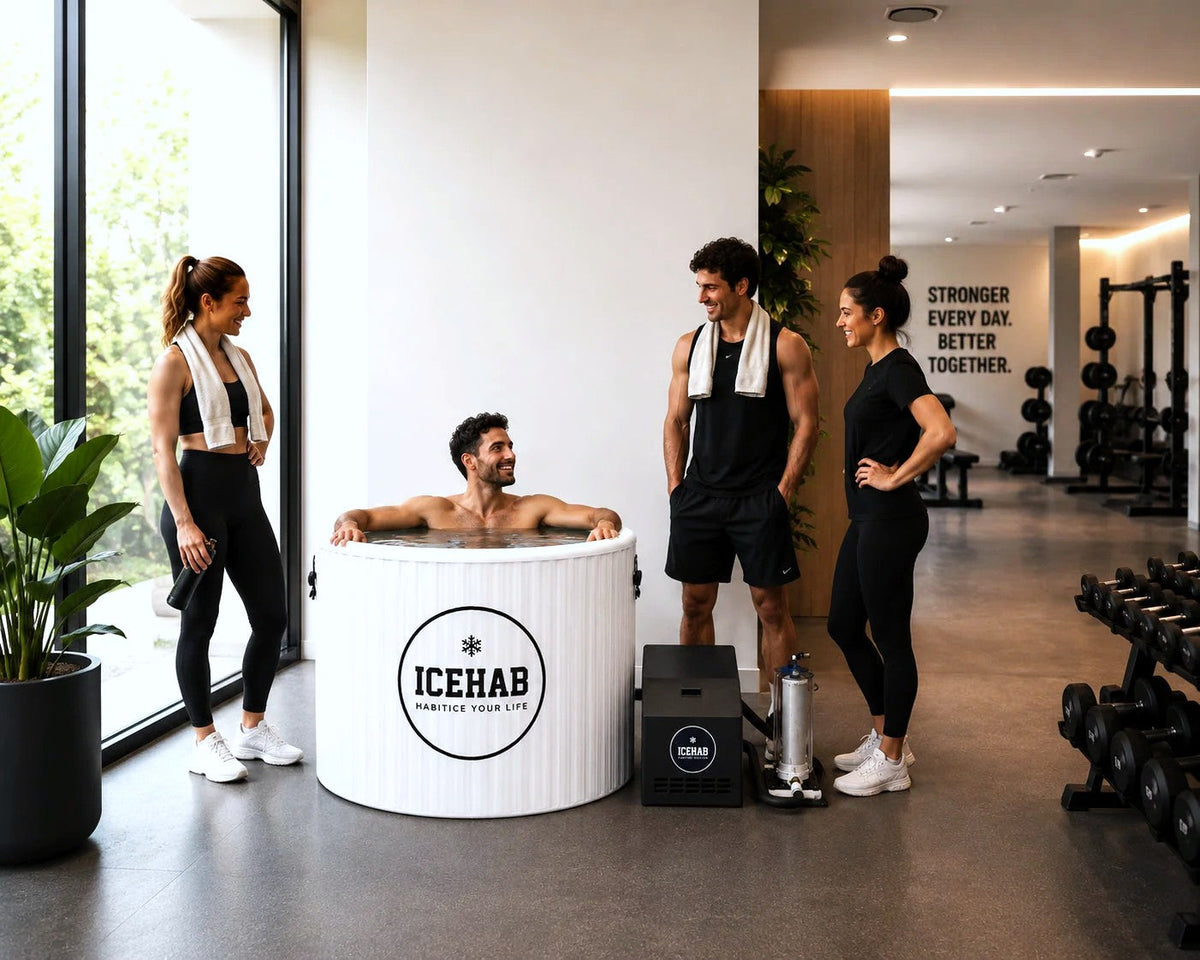 Business
Cold plunge for gyms, hotels and spas: a buyer's guide
A cold plunge for a business needs to handle many users a day: a stronger chiller, two-stage filtration, a water care routine with UV and Ozone, clear guest guidance and fast support. Check capacity per day, hygiene, placement and power, and how quickly you can get help. AirTub Pro is built for up to 20 people a day with a 535 W chiller and dual 10-inch filtration (20 + 100 micron). 1 min read Safety
Cold plunge safety: how to start the right way
Start warmer and shorter (12–15°C for 2–3 minutes), get in legs first, keep your head and face out of the water, breathe out slowly and never hold your breath. Talk to your doctor first if you have a heart condition, high blood pressure or are pregnant. Do not plunge after alcohol, and keep the cold plunge's electrics on a socket with a residual-current device (RCD). 1 min read Training
Cold plunge after a workout: when is the right time?
It depends on your goal. After endurance sessions, matches and competition days, plunging soon after helps with soreness and feeling ready again. If your main goal is building muscle and strength, avoid plunging right after lifting: a study in The Journal of Physiology found that regular cold water immersion straight after strength training reduced gains in muscle mass and strength. Plunge on other days, in the morning, or several hours later. 1 min read Basics
How long should you stay in a cold plunge?
For a daily routine, about 5 minutes at 7–10°C is plenty. Beginners should start with 2–3 minutes at 12–15°C. Recovery studies used longer sessions of 10–15 minutes in milder water around 10–15°C. The colder the water, the shorter the session. 1 min read Basics
How cold should a cold plunge be?
For most people 10–15°C is the right place to start, and 7–10°C works well for a daily routine once you are used to it. Research on recovery found the best results for muscle soreness between about 10 and 15°C. Colder is not automatically better: below 7°C keep sessions short and build up gradually. 2 min read Basics
Cold plunge vs ice bath: what's the difference?
An ice bath is a tub of water cooled with bags of ice: cheap to start, but the temperature rises as the ice melts and the water is usually emptied after each use. A cold plunge with a chiller holds the exact temperature you set, down to 3°C, filters the water continuously and is ready whenever you are, with no ice to buy or carry. 2 min read Setup
Indoor or outdoor cold plunge: where should you put it?
Both work well. Indoors you get easy daily access and stable conditions: protect the floor with an insulating mat and keep the room ventilated. Outdoors you get space and fresh air: keep the chiller ventilated, shaded and out of the rain, and use a weather-protected socket. UV XL and Ozone work in both places. 2 min read
Need help choosing?
The right AirTub and extras for you, with the final price.
We speak your language.
Flexible payment
Pay in full or split into instalments
Pay in full
Card, Apple Pay, Google Pay or bank transfer
Klarna
Pay in 3
Instalments with Klarna
Scalapay
Pay in 4
Instalments with Scalapay
PayPal
Pay in 3–12
Instalments with PayPal
Subject to provider approval. Your order, delivery and warranty stay exactly the same.