

Inflatable or rigid cold plunge: which should you choose?

In this article
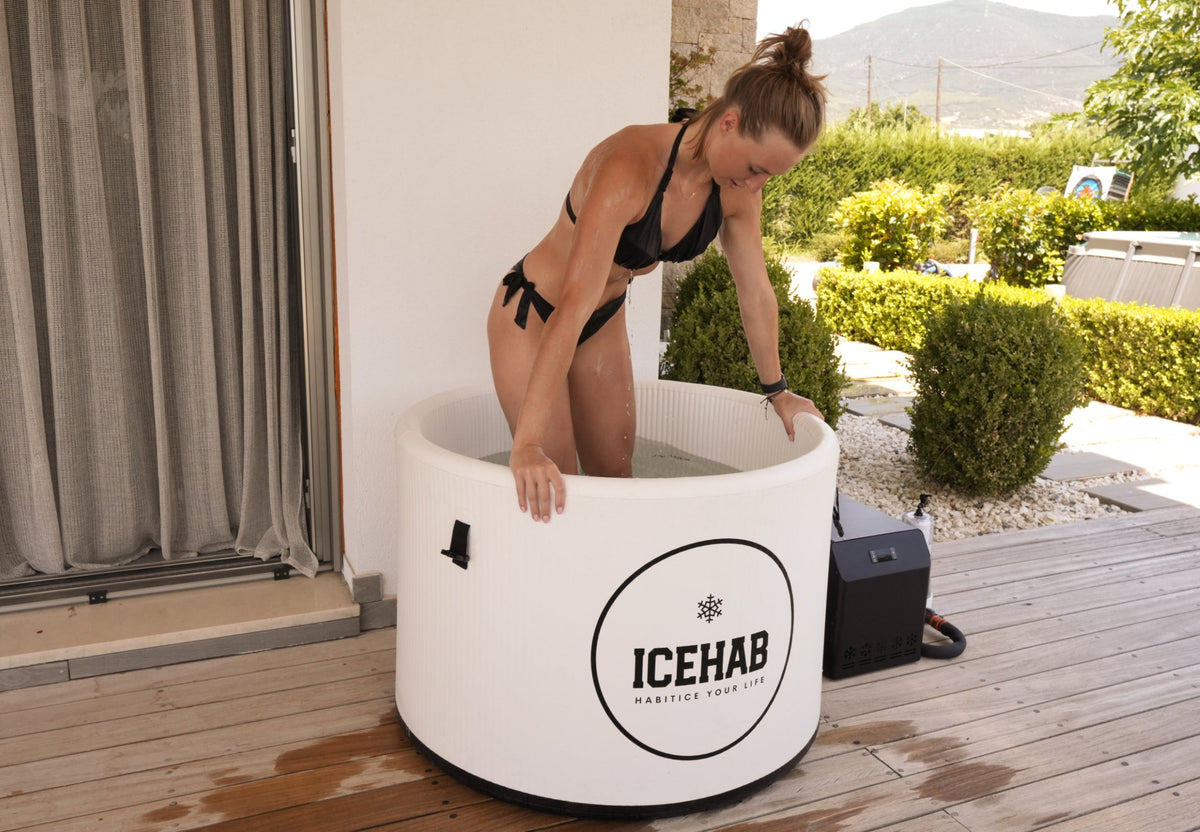
A rigid tub is fixed and heavy; a well-made inflatable tub with SUP (stand-up paddle) construction is rigid once inflated, light to move, quick to set up and easy to store. For most homes and many businesses, a premium inflatable tub with a proper chiller and filtration gives the same experience with far more flexibility.
When people start looking at cold plunges, the first split they notice is between rigid tubs and inflatable ones. The tub matters less than most people think; what makes the daily difference is the chiller and the filtration. Here is how the two compare.
At a glance
| Inflatable (SUP) | Rigid | |
|---|---|---|
| Setup | About 20 minutes, no tools | Delivery and placement, often with help |
| Weight empty | Light; AirTub Home system about 35 kg | Heavy |
| Moving it | Drain, deflate, set up again | Difficult |
| Storage | Packs into a backpack | Takes its space all year |
| Feel when in use | Firm once inflated | Firm |
| Cooling and filtration | Depends on the chiller | Depends on the chiller |
What “SUP construction” means
SUP is the material used for stand-up paddle boards: two layers joined by thousands of internal threads. Once inflated to pressure, the walls are firm enough to lean on and sit against. That is how AirTub stays rigid in use while weighing a fraction of a fixed tub.
When a rigid tub makes sense
If the cold plunge is part of a permanent spa build and will never move, a rigid or built-in tub can fit the design. For homes, rented spaces, balconies, and clubs that may rearrange, the flexibility of an inflatable tub usually wins.
What actually matters
- The chiller: it decides how cold the water gets and how steady it stays. See How does a cold plunge chiller work?
- Filtration and water care: they decide how long you can keep the same water.
- An insulated lid: keeps the cold in and dirt out.
- Support and warranty: who helps you if something goes wrong.
Check all eight points in Cold plunge at home: 8 things to check before you buy.
Frequently asked questions
Will an inflatable tub lose pressure?
A little over time, like any inflatable. A quick top-up with the included pump keeps it firm.
Can I lean on the walls?
Yes. Inflated to the right pressure, SUP walls are firm enough to sit back against.
AirTub
Ready for your own cold plunge?


Keep reading
 Buying guide
Cold plunge at home: 8 things to check before you buy
Check where it will stand, how you will power it, how many people will use it, how you will keep the water clean and how much daily effort you want. A self-cooling cold plunge with a chiller needs no ice and no plumbing: a standard 220 V socket, a garden hose to fill it and about 20 minutes to set up. 3 min read Training
Cold plunge for runners, padel players and CrossFit athletes
Runners and padel players can plunge soon after long runs, matches and tournament days, when feeling fresh for the next effort matters most. CrossFit and strength athletes should keep cold water away from heavy lifting sessions and use it on conditioning days, rest days or several hours later. Around 10–15°C for up to 10 minutes is a good recovery setting. 1 min read Setup
Cold plunge in winter: what changes and how to adapt
Winter is easy on the chiller and harder on you. Keep the lid on, shelter the chiller from direct rain and snow, consider setting the water a degree or two warmer, and plan a warm place to dry off and get dressed right after. In long freezing spells outdoors, ask us for advice for your location, or move the cold plunge indoors. 1 min read Our team, not a bot
Need help choosing?
Ready to choose your AirTub?
The right AirTub and extras for you, with the final price, or ask our team.
We speak your language.
Flexible payment
Pay in full or split into instalments
Pay in full
Card, Apple Pay, Google Pay or bank transfer
Pay in 3
Instalments with Klarna
Pay in 4
Instalments with Scalapay
Pay in 3–12
Instalments with PayPal
Subject to provider approval. Your order, delivery and warranty stay exactly the same.