

DIY ice bath, chest freezer or chiller: an honest comparison
In this article
Bags of ice work for a try, but the water warms up again every day. A converted chest freezer is cheap to buy, but it was never made to hold water with a person in it, so safety, cleaning and temperature control are on you. A cold plunge with its own chiller and filter costs more up front, and in return it holds the temperature you set every day, with clean water and no ice.
Almost everyone who gets into cold water asks the same question: can I build it myself? You can, and many people start that way. Here is what each option really means in daily life, so you can decide with open eyes.
Option 1: a tub and bags of ice
The simplest way to start. Fill a tub or a large container with tap water and add ice. It works for a first try, but it is hard to keep going:
- Lots of ice. To cool about 220 litres of water from 18°C to 8°C you need roughly 27 kg of ice, just from the physics of melting ice. And the next day the water has warmed up again.
- The temperature drifts. It is coldest when the ice goes in and warmer by the end of your session.
- No filtration. The water has to be changed often.
Option 2: a converted chest freezer
A popular DIY project: seal a chest freezer, fill it with water and control it with an external thermostat. It can get very cold. But a freezer was designed for food, not for water with a person in it:
- Electricity and water. You sit in water inside an appliance that was not built or tested for this. At the very least it needs a residual-current device (RCD) and careful sealing, and the risk stays with you.
- Ice and control. Without good control the water freezes at the walls or overshoots the temperature you want.
- Hygiene. No filter and no circulation, so the water needs frequent changes and cleaning.
- Warranty. Using a freezer this way usually ends the manufacturer's warranty.

Option 3: a cold plunge with its own chiller
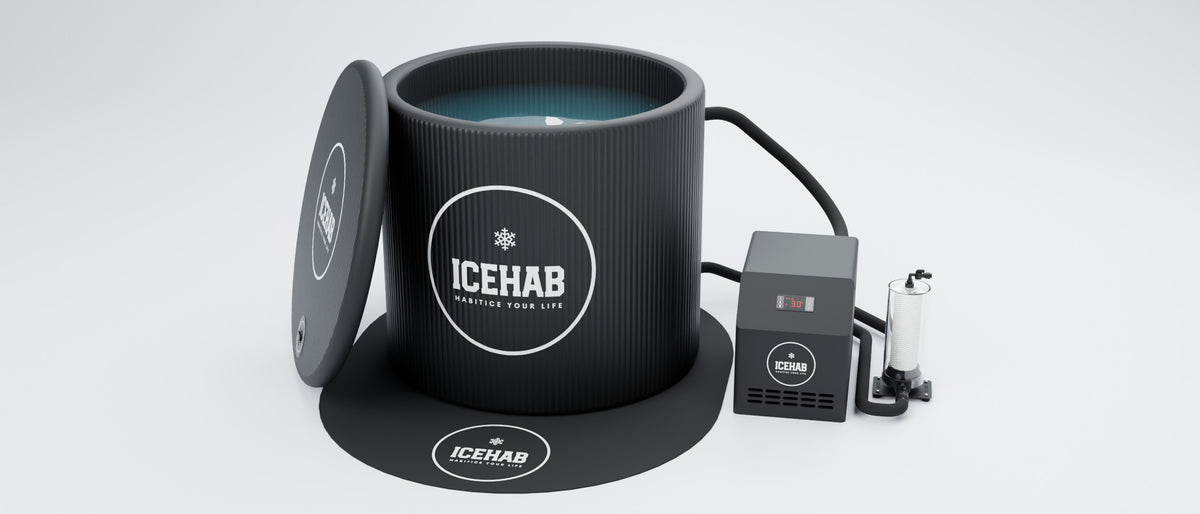
A chiller is a small cooling unit outside the tub. It pumps the water through a filter, cools it to the temperature you set and holds it there. On AirTub you choose the temperature in the Smart App, down to 3°C, and the chiller cools again only when the water has warmed by 3°C. The water keeps circulating through the filter the whole time.
Side by side
| Option | In daily life |
|---|---|
| Ice | Cold for a short while, no filter, a lot of work every day. Cheap to start. |
| Freezer | Can get very cold, but not made for people: safety, cleaning and control are on you. Cheap to start. |
| Chiller | The same temperature every day, filtered water, little work. Costs more up front. |

So which one?
- Just curious? Try a few cold showers or one ice bath with bags of ice first. See our cold shower vs cold plunge guide.
- You like tinkering and accept the risk? A freezer project can work, but put safety first.
- You want it every day, without effort? A system with a chiller and filter is what keeps the habit going. AirTub Home sets up in about 20 minutes and runs on a standard 230 V socket.
Running costs are lower than most people expect: see how much electricity a cold plunge uses.
Frequently asked questions
Is a chest freezer ice bath safe?
It was not designed for it. If you build one, use an RCD, keep all electrics away from the water and unplug the freezer before you get in.
How much ice do I need for an ice bath?
For about 220 litres, cooling from 18°C to 8°C takes roughly 27 kg of ice, and more on a warm day.
Does a chiller need ice?
No. It cools the water on its own and holds the temperature you set.
AirTub
Ready for your own cold plunge?


Keep reading
 Buying guide
Cold Plunge Size Guide: Dimensions, Litres and Space Needed
The right cold plunge lets you sit upright with your shoulders under water, without taking over the room. AirTub is 90 cm across and 80 cm high and holds about 220 litres. Plan a flat, level spot with room for the chiller next to it and a socket within reach, and remember it weighs about 220 kg when full. 2 min read Buying guide
How much does a cold plunge cost? Purchase, running costs and alternatives
The real cost of a cold plunge is the purchase plus three small running costs: electricity for the chiller, water changes and filters. With a lid and a shaded spot, electricity is the main one and it stays modest. Compared with buying ice or paying for sessions, a home cold plunge usually pays off for people who use it several times a week. 2 min read Buying guide
Inflatable or rigid cold plunge: which should you choose?
A rigid tub is fixed and heavy; a well-made inflatable tub with SUP (stand-up paddle) construction is rigid once inflated, light to move, quick to set up and easy to store. For most homes and many businesses, a premium inflatable tub with a proper chiller and filtration gives the same experience with far more flexibility. 1 min read Our team, not a bot
Need help choosing?
Ready to choose your AirTub?
The right AirTub and extras for you, with the final price, or ask our team.
We speak your language.
Flexible payment
Pay in full or split into instalments
Pay in full
Card, Apple Pay, Google Pay or bank transfer
Pay in 3
Instalments with Klarna
Pay in 4
Instalments with Scalapay
Pay in 3–12
Instalments with PayPal
Subject to provider approval. Your order, delivery and warranty stay exactly the same.