

Sauna and cold plunge: how to combine hot and cold the right way
In this article
Go from the sauna to the cold plunge, not the other way round. A classic round is 10–15 minutes in the sauna, a short rest, then 1–3 minutes in water at 8–15°C. Most people do 2–3 rounds. Finish with cold if you want to feel awake, or rest and let your body warm up on its own if it is evening.
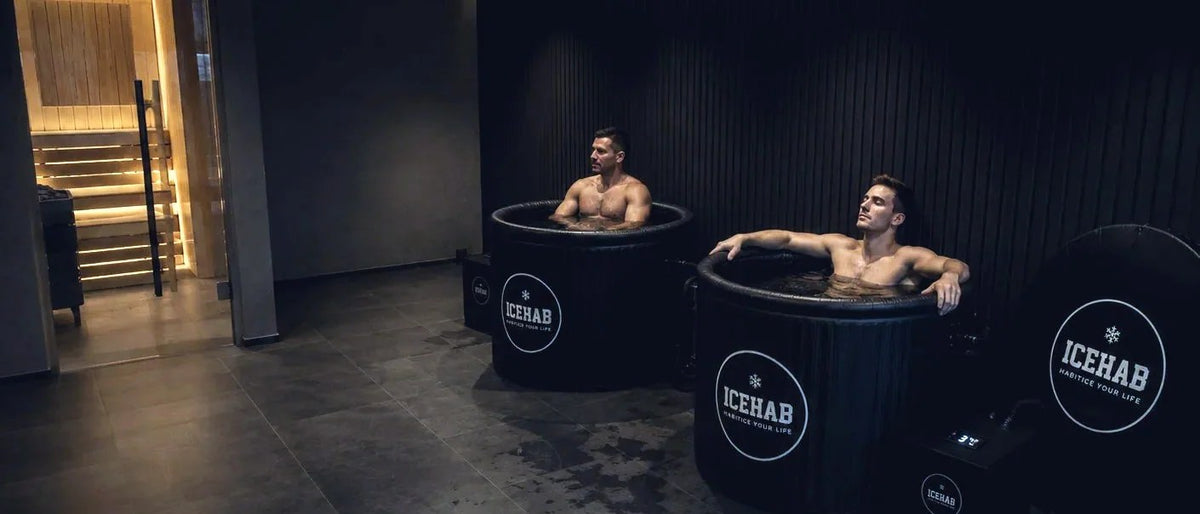
Hot and cold together is one of the oldest recovery rituals there is. In Finland, Scandinavia and the Baltics people have gone from the sauna into a lake or a snowbank for centuries. Today the same routine is in spas, gyms and more and more homes. Here is how to do it well and safely.
What is contrast therapy?
Contrast therapy simply means moving between heat and cold. The sauna warms you up and your blood vessels open. The cold plunge does the opposite: the vessels narrow, your breathing quickens for a moment and then settles. Going back and forth between the two is what most people describe as the deep, calm, "reset" feeling afterwards.
The right order: sauna first, then cold
Start in the sauna: when you are warm, the cold is much easier to handle. Then go into the cold plunge. Rest between rounds. A simple round looks like this:
| Step | What | Minutes |
|---|---|---|
| 1 | Sauna | 10–15 |
| 2 | Short rest, rinse off | 1–2 |
| 3 | Cold plunge, 8–15°C | 1–3 |
| 4 | Rest, sit or lie down | 5–10 |
Repeat 2–3 times. If you are new to cold water, keep the plunge short and the water a little warmer. Our guides on how cold a cold plunge should be and how long to stay in go into more detail.

End on cold or end on heat?
Both are fine, it depends on what you want next. Ending on cold leaves most people feeling awake and fresh, so it suits the morning or the start of a busy day. In the evening, many prefer to end with a rest and let the body warm up on its own, with warm clothes and no hot shower straight away.
What the research says
- Body heat. Young men who had combined short cold-water dips with sauna sessions 2–3 times a week for years produced more heat when they were cooled than a control group (Søberg et al., 2021).
- Sauna on its own. A large observational study in Finland linked frequent sauna use with fewer fatal heart events over about 20 years. Observational means it shows a link, not proof of cause.
- How it feels. Most of what people report, better mood, deep calm and good sleep, comes from experience more than from large trials. Treat it as a routine that helps you feel good, not as a treatment.
More on what cold water does on its own in Cold plunge benefits.
Safety first
- No alcohol before or during a sauna and cold plunge session.
- Drink water between rounds.
- Get into the cold water slowly, never jump in head first.
- Stand up slowly when you leave the sauna or the plunge: the change in blood pressure can make you dizzy.
- If you have a heart condition, high blood pressure or are pregnant, talk to your doctor first.
Read our full cold plunge safety guide before your first session.

Sauna and cold plunge at home or in your spa
You do not need a lake. A cold plunge with a chiller keeps the water at the temperature you set, every day, with no ice. Place it close to the sauna so you can go straight from one to the other. For home use, AirTub Home is built for 1–8 people a day. For spas, gyms and hotels with many users in a row, AirTub Pro has a stronger chiller for up to 20 people a day. See also our guide for gyms, hotels and spas.
Frequently asked questions
How many rounds of sauna and cold plunge should I do?
Two to three rounds is the classic routine. One round is enough to start.
How cold should the water be after the sauna?
Between 8 and 15°C works for most people. Colder is not better: a short, comfortable plunge that you repeat is the goal.
Can I go straight from the sauna into the cold plunge?
Yes, that is the traditional way. Take a short pause to rinse off and catch your breath, then get in slowly.
Is it OK to do it every day?
Many people do. Listen to your body and keep rest days if you feel tired.
Sources
- Søberg S. et al. Altered brown fat thermoregulation and enhanced cold-induced thermogenesis in young, healthy, winter-swimming men. Cell Reports Medicine, 2021.
- Laukkanen T. et al. Association between sauna bathing and fatal cardiovascular and all-cause mortality events. JAMA Internal Medicine, 2015.
AirTub
Ready for your own cold plunge?


Keep reading
 Basics
Ice bath breathing: how to stay calm in cold water
The first gasp in cold water is a reflex called cold shock, and it fades with practice. Breathe in through the nose for about 4 seconds and out slowly for 6–8 seconds, keep your shoulders down and stay still. Never hold your breath or do forced, fast breathing in the water. 2 min read Basics
Cold shower vs cold plunge: which one is worth it?
A cold shower is a free, easy way to start. A cold plunge goes further: your whole body is in water at a temperature you choose, every time, so you can follow a real routine and see how you progress. Many people start with cold showers and move to a plunge when they want it to be colder, more even and more relaxing. 2 min read Basics
How much electricity does a cold plunge chiller use? Does it run all day?
Yes, the chiller stays plugged in 24/7, but it does not cool all the time. It works in cycles: it cools to the temperature you set, pauses, and starts again when the water has warmed by 3°C. Power is 365 W on AirTub Home and 535 W on AirTub Pro. How much it really uses depends mostly on the lid, shade and the temperature you choose. 2 min read Our team, not a bot
Need help choosing?
Ready to choose your AirTub?
The right AirTub and extras for you, with the final price, or ask our team.
We speak your language.
Flexible payment
Pay in full or split into instalments
Pay in full
Card, Apple Pay, Google Pay or bank transfer
Pay in 3
Instalments with Klarna
Pay in 4
Instalments with Scalapay
Pay in 3–12
Instalments with PayPal
Subject to provider approval. Your order, delivery and warranty stay exactly the same.